
Budget 2026 Decoded: Fourplex Financing, Private Multi-Unit Insurance and Tax Changes for Golden Horseshoe Investors
Short answer: Federal Budget 2026, tabled on November 5, 2026, does little for traditional commercial real estate, but it opens a real financing door for small multi-residential investors. Starting with mortgage insurance applications submitted on or after February 1, 2027, newly built triplexes and fourplexes can qualify for insured loans of up to 90% of completed value, and private insurers can start covering 5 to 50 unit buildings. Tax rates didn't change, buildings were left out of the new immediate write-off, and the new $15 million capital gains exemption excludes real estate businesses.
Key takeaways
- Small rentals get more leverage. Newly built triplexes and fourplexes can get insured financing of up to 90% of projected value on completion, with no owner-occupancy requirement and no maximum property value.
- CMHC gets competition. Private mortgage insurers will be allowed to insure buildings with 5 to 50 units, starting with applications submitted on or after February 1, 2027.
- Buildings aren't part of the Productivity Mega Deduction. Equipment and most other depreciable assets can be written off right away, but Class 1 and Class 3 buildings are excluded.
- The new Canada Growth Incentive skips real estate. The exemption of up to $15 million in capital gains excludes real estate, food and accommodation, professional practices and franchised businesses, among others.
- Income still sets the loan. A higher loan-to-value cap only helps if the property's income, and for triplexes and fourplexes your personal debt ratios, can carry the debt.
What did Budget 2026 change for multi-residential financing?
This is the part of the budget that matters most to investors in our market. The budget confirmed the mortgage insurance changes promised in the Spring Economic Update 2026, and the Department of Finance published the detailed rules the same day. They apply to insurance applications that lenders submit to insurers on or after February 1, 2027.
What changes for triplexes and fourplexes?
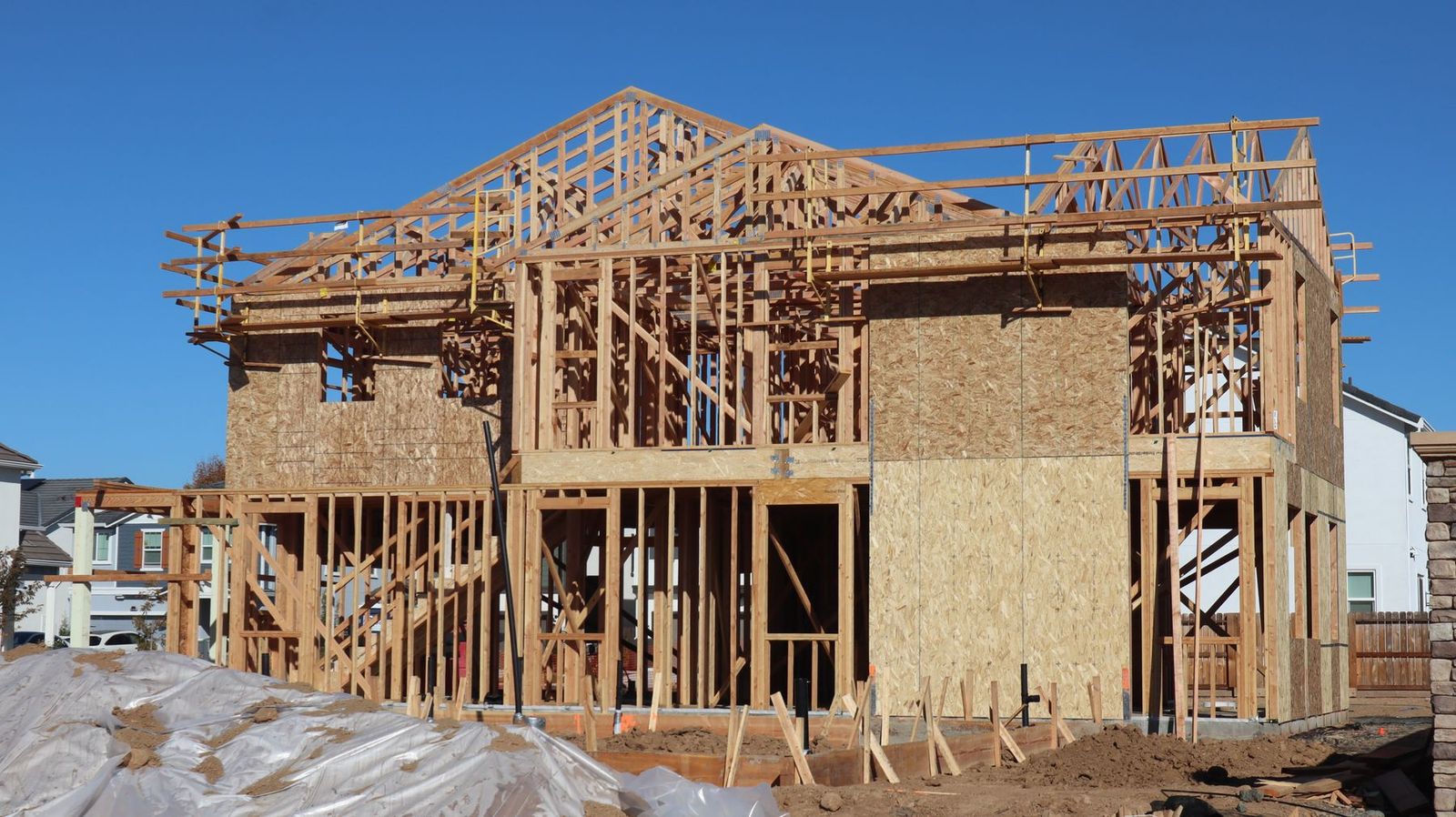
Photo: D Goug / Pexels
Newly built three- and four-unit properties will be eligible for insured construction or purchase financing of up to 90% of projected value on completion, with no maximum property value and no owner-occupancy requirement. Once the building is finished, the insured mortgage can be amortized over up to 30 years. That's a big deal for builders and investors who have been stuck between residential lending rules that want you living there and conventional commercial lending that asks for a much bigger down payment.
There's a catch. The long-term mortgage is still qualified like a residential loan: a maximum gross debt service ratio of 39% and total debt service ratio of 44% at the minimum qualifying rate, and at least one borrower or guarantor with a credit score of 600 or more. Your own income and credit still count.
What changes for 5 to 50 unit buildings?
Private mortgage insurers will be allowed to insure loans on buildings with 5 to 50 units for construction, purchase, refinance and renewal, competing directly with CMHC. Finance Canada's published rules for term financing:
- Maximum loan-to-value of 90% for new construction and 85% for other transactions.
- Maximum amortization of 50 years for new construction and 40 years for other transactions.
- Minimum debt coverage ratio of 1.15 on a five-year term or 1.10 on a ten-year term.
- Borrower net worth of at least 25% of the loan, with a $100,000 minimum, based on assets held in Canada.
- One legal title. Separately titled properties can't be bundled together to reach the unit count.
Does 90% loan-to-value mean you can actually borrow 90%?
Usually not. Storeys ran an illustration worth repeating. Take a newly built $5 million building with $225,000 of net operating income, a 5% rate, a 50-year amortization and a 1.15 debt coverage ratio. The income supports roughly $3.62 million of debt, well short of the $4.5 million that 90% of value would suggest. The loan-to-value cap is a ceiling. The rent roll decides how close you get to it.
The loan-to-value cap is a ceiling. The rent roll decides how close you get to it.
What did the budget do for commercial property and business owners?
Can I write off a commercial building under the Productivity Mega Deduction?

Photo: iam luisao / Pexels
No. The Department of Finance announced the deduction in September, and the budget confirmed it. It allows permanent immediate expensing of most depreciable property acquired on or after September 15, 2026, but buildings and additions to buildings in CCA Classes 1 and 3 are excluded. Manufacturing and processing buildings keep the temporary immediate expensing introduced in Budget 2025.
For an owner-operator, the opportunity is in what goes inside the building. Machinery, equipment, racking and other assets in eligible classes can be deducted in full in the year they become available for use. According to PwC's summary of Finance's draft Productivity Mega Deduction rules, used equipment bought at arm's length can also qualify, which matters when you're buying a business. If you're buying an industrial unit in Stoney Creek or Brantford for your own company, plan the equipment purchases with your accountant at the same time as the real estate.
Does the new Canada Growth Incentive help business sellers?
In limited cases. The proposed exemption covers up to $15 million of capital gains per person, per business, on qualifying shares of a Canadian-controlled private corporation. The shares have to be issued on or after November 5, 2026 and before 2037, and held for at least 36 months before the sale. They also have to be newly issued for cash or for employment services, by a company with no more than $100 million in assets. Real estate, food and accommodation, consulting, professional practices and franchised businesses are among the excluded sectors. Claiming it also limits the Lifetime Capital Gains Exemption on shares of the same company.
In practice, most owners selling an established business over the next few years won't be able to use it. It's aimed at new equity going into growing companies.
Is there anything for sellers of commercial property?
One technical change is worth knowing about. For non-resident corporations selling Canadian real estate, the budget proposes to cut the purchaser's tax withholding from 25% to 15% of the purchase price, or from 50% to 30% for property whose sale produces fully taxable income. The change would apply to sales on or after January 1, 2027. If you're buying from a foreign corporate vendor, have your lawyer confirm which rate applies.
How do interest rates fit into this?
The Bank of Canada raised its policy rate by 25 basis points to 2.50% on October 28, its first hike since July 2023. Longer-term yields have eased since then. Bank of Canada data shows the 10-year Government of Canada yield at 3.65% on November 6, down from about 3.99% at the end of September. CBRE's Q3 2026 cap rate report put the national all-property average cap rate at 6.56% and the spread over the 10-year bond at a three-year low of 256 basis points. With spreads that thin, financing terms, not just price, decide which deals work.
What this means for Golden Horseshoe investors, owners and tenants
Hamilton, Brantford, Burlington and Ancaster have a lot of the deal types this budget targets: infill lots that can take a fourplex, older 5 to 20 unit walk-ups, and owner-operators buying their own industrial or flex space. Here's how I'd approach it.
- Planning a triplex or fourplex? Model the project two ways: at 90% of completed value, and at what your income and debt ratios actually support. Build to the lower number. Time your take-out financing for insurance applications on or after February 1, 2027.
- Own a 5 to 50 unit building? Ask your mortgage broker or lender how private insurance might compare with CMHC on premiums, coverage requirements and timing once the rules take effect. Don't refinance early to chase rules that aren't in force until February 2027.
- Buying space for your business? Separate the building from the equipment in your budget. The building doesn't qualify for immediate expensing, but much of what goes inside it may.
- Selling a business? Don't assume the new $15 million exemption applies to you. Many local businesses fall into excluded sectors, and it only covers new shares issued on or after November 5, 2026. Have your accountant map out the Lifetime Capital Gains Exemption first.
- A tenant? Expect more new rental construction competing for the same infill and transit-adjacent land over the next few years. That can affect redevelopment plans for older commercial strips.
Commercial financing ties all of this together. The right structure, whether insured, conventional, private or a mix during construction, often matters more than the purchase price. Before you commit to a site or a building, get the debt side underwritten.
Frequently Asked Questions
When do the new multi-unit mortgage insurance rules take effect?
They apply to mortgage insurance applications that lenders submit on or after February 1, 2027. Finance Canada has published the parameters, but each insurer and lender will still apply its own underwriting.
Can I get 90% financing on a new fourplex in Hamilton?
Under the new rules, newly built triplexes and fourplexes can get insured loans of up to 90% of projected value on completion, with no owner-occupancy requirement and no price cap. You still need to qualify personally: a maximum 39% gross and 44% total debt service ratio at the minimum qualifying rate, and a credit score of at least 600.
Does the Productivity Mega Deduction apply to commercial buildings?
No. Buildings in CCA Classes 1 and 3 are excluded. Most other depreciable property acquired on or after September 15, 2026 can be fully deducted in the year it becomes available for use, and manufacturing and processing buildings keep the temporary immediate expensing from Budget 2025.
Can I use the Canada Growth Incentive when I sell my business?
Only in limited cases. It applies to qualifying new shares issued on or after November 5, 2026 and held at least 36 months, and it excludes real estate, food and accommodation, professional practices and franchised businesses, among others. Ask your accountant how it interacts with the Lifetime Capital Gains Exemption.
Did Budget 2026 change corporate or personal tax rates?
No. The budget's tax measures don't change the general personal or corporate income tax rates.
Talk to Above All Commercial
If you're buying, selling, leasing or financing commercial or multi-residential property in Hamilton, Burlington, Brantford, Ancaster or elsewhere in the Golden Horseshoe, Above All Commercial can help you run the numbers before the new rules take effect.
Sources
Budget 2026: Masters of our destiny (Government of Canada): https://budget.canada.ca/2026/home-accueil-en.html
Department of Finance Canada, Budget 2026 news release, November 5, 2026: https://www.canada.ca/en/department-finance/news/2026/11/government-of-canada-releases-budget-2026-masters-of-our-destiny.html
Budget 2026, Chapter 3: A more affordable life (mortgage insurance changes): https://budget.canada.ca/2026/report-rapport/chap3-en.html
Budget 2026, Tax Measures: Supplementary Information: https://budget.canada.ca/2026/report-rapport/tm-mf-en.html
Department of Finance Canada, Mortgage insurance rule changes to support "missing middle" housing (backgrounder): https://www.canada.ca/en/department-finance/news/2026/11/mortgage-insurance-rule-changes-to-support-missing-middle-housing.html
Department of Finance Canada, Productivity Mega Deduction announcement: https://www.canada.ca/en/department-finance/news/2026/09/government-of-canada-introduces-new-productivity-mega-deduction-to-boost-canadas-advantage-as-the-most-competitive-g7-country-for-new-business-inve.html
Bank of Canada, rate announcement, October 28, 2026: https://www.bankofcanada.ca/2026/10/fad-press-release-2026-10-28/
Bank of Canada, Canadian bond yields: https://www.bankofcanada.ca/rates/interest-rates/canadian-bonds/
CBRE, Canadian Cap Rates & Investment Insights Q3 2026: https://www.cbre.ca/insights/reports/canada-cap-rates-investment-insights-q3-2026
Storeys, Budget 2026 and small rental builders: https://storeys.com/budget-2026-small-rental-builders/
PwC Canada, Tax Insights: Federal tax measures to boost investments in Canada (Productivity Mega Deduction draft rules): https://www.pwc.com/ca/en/services/tax/publications/tax-insights/federal-tax-measures-boost-investments-canada-2026.html